Before the Big Day · Part 2
First Look or Not? How Your Choice Shapes Your Wedding Day Timeline
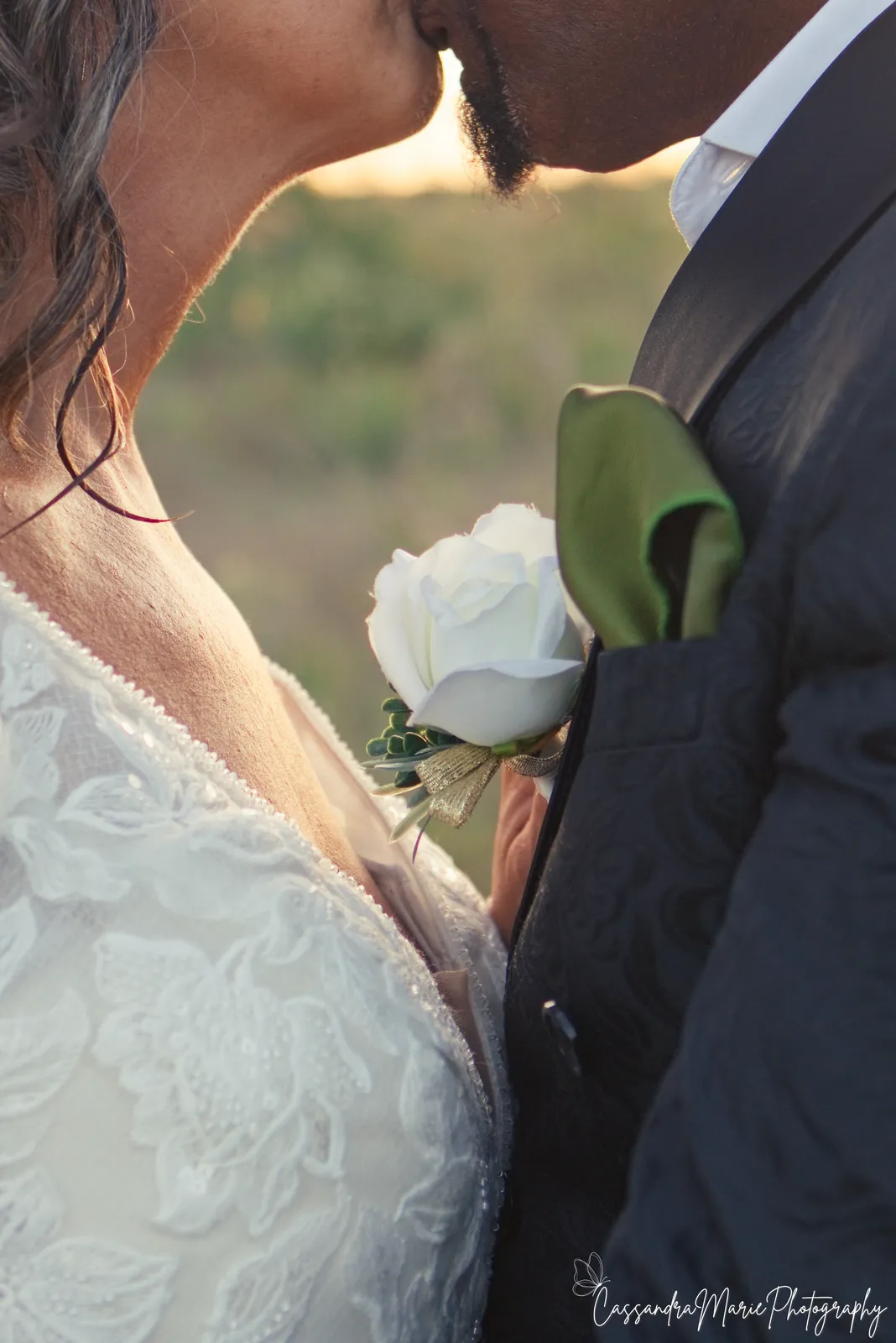
Of all the questions couples ask me as an Omaha wedding photographer, this one comes up more than almost any other:
"Should we do a first look?"
My honest answer is that there's no wrong choice. But there is a right choice for you, and it's worth making on purpose. Whether or not you see each other before the ceremony changes more than just one moment. It changes when your portraits happen, how much time you have for them, whether you get to enjoy your cocktail hour, and even what kind of light we'll have for your photos.
In Part 1, we talked about how I can't photograph what isn't there, and that includes time. This decision is one of the biggest ways you'll shape the time available for your photos. So let's walk through it honestly: what a first look actually is, what it gives you, what it costs you, and how each option plays out on a real wedding day timeline.
What Is a First Look?
A first look is a private moment, planned before the ceremony, where you and your partner see each other for the first time on your wedding day. Usually one of you waits with your back turned, the other walks up, there's a tap on the shoulder, and you turn around.
It's quiet. It's just the two of you (and me, hanging back so you can actually be in the moment). No crowd, no aisle, no hundred sets of eyes. Just you, your person, and all the nerves and excitement of the morning finally meeting in one moment.
The alternative is the traditional approach: the first time you see each other is when one of you walks down the aisle.
Both are beautiful. Both photograph beautifully. They just create very different days.
The Case for a First Look
You get the rest of your day back. This is the biggest practical reason couples choose a first look. When you see each other before the ceremony, we can take care of your portraits (wedding party, couple, and immediate family) before guests arrive. That means after the ceremony, you actually get to go to your cocktail hour, hug your guests, and eat the appetizers you picked out.
It calms the nerves. Many couples tell me the hardest part of the morning is the waiting. A first look lets you take a breath together, hold hands, and settle in. By the time you walk down the aisle, you're not a bundle of nerves; you're ready.
You get more time and more variety in your portraits. Without the pressure of guests waiting, we have room to breathe. More locations, more poses, more in-between moments. More time doesn't automatically mean better photos, but it gives us space to create a fuller, more relaxed gallery.
It's a real moment, not a staged one. Some couples worry a first look will feel fake or posed. It doesn't have to. You're seeing each other for the first time in your wedding attire, on your wedding day. The emotion is real. My job is just to give you the space to feel it.
It gives you a private emotional moment. During a ceremony, you're on display. A first look lets you react however you want: laugh, cry, spin around, say the things you want to say without an audience.
The Case for Waiting Until the Aisle
The aisle moment is iconic for a reason. There's something powerful about seeing each other for the first time surrounded by everyone you love. That rush of emotion, the moment the doors open, the look on your partner's face. For a lot of couples, that's the moment they've pictured for years.
Tradition matters to some couples, and that's valid. If waiting feels meaningful to you, your family, or your culture, honor that. Your wedding should feel like yours.
Your guests get to see the reaction too. Part of the magic of the aisle moment is that everyone shares in it. It becomes a moment for the whole room, not just the two of you.
The tradeoff is time. Here's the honest part: if you wait until the ceremony, all of your portraits have to happen after it. Family photos, wedding party photos, and couple portraits all get squeezed into the window between your ceremony and your reception entrance. For most couples, that means missing some or all of cocktail hour, and having less time for your portraits overall.
That doesn't mean it can't work beautifully. It absolutely can. It just takes more careful planning, which is exactly what we'll do together.
What About the Aisle Moment If You Do a First Look?
This is the worry I hear most: "If we see each other beforehand, won't the ceremony feel less special?"
Here's what I've seen: walking down the aisle toward your partner is still an emotional moment, even after a first look. You're not just seeing an outfit anymore. You're seeing your people, the room, the moment you've been planning for months. Those feelings don't disappear just because you've already held hands that morning.
Both moments can exist. You don't have to choose one emotional high point. You can have two.
How Each Choice Changes Your Photo Timeline
This is where the decision gets real. Below are two sample timelines for a 4:00 PM ceremony, just to show how differently the day flows. Every wedding is different, and we'll build your actual timeline together, but these give you a feel for the shape of each option.
Sample timeline with a first look:
- First look
- Wedding party photos
- Couple portraits
- Immediate family photos
- Photos wrap, and you tuck away to relax, touch up, and breathe before guests arrive
- Ceremony
- Cocktail hour (you're there!)
- A short golden hour portrait session, 15 to 20 minutes, slipped away from the reception
Wrapping photos a full hour before the ceremony matters. It gives you time to rest, freshen up, and get out of sight before early guests start arriving, so you're not rushing straight from portraits into the processional.
Sample timeline without a first look:
- Ceremony (the first time you see each other)
- Family photos
- Wedding party photos
- Couple portraits
- Join the reception, usually after cocktail hour has wrapped up
- Golden hour portraits, if the timing allows
Notice the difference? With a first look, your photos are done before the ceremony, and the time after it belongs to you and your guests. Without one, everything stacks up after the ceremony, and every minute counts.
Here's the part I want you to know going in. When all your portraits happen after the ceremony, there's very little wiggle room. If family photos run long (an uncle wanders off to the bar, a grandparent needs extra time, a group gets bigger than planned) or something unexpected happens, those minutes have to come from somewhere. I've had to do this before: we cut wedding party photos back to keep the day on track. You'll still get the essentials, but you'll get a lot less variety. With a first look, that buffer is already built in, so one delay doesn't ripple through the rest of your photos.
Golden Hour, Seasons, and Why Omaha Weddings Need a Plan
Golden hour is my signature, and planning around it is always my job, not yours. But your first look decision affects what's possible, especially here in Nebraska, where sunset times change dramatically through the year.
In late June, the sun doesn't set in Omaha until around 9:00 PM. In December, it's gone before 5:00 PM.
That matters. For a winter wedding with a 4:00 PM ceremony and no first look, your post-ceremony portraits will likely happen after the sun has already set. We can still create beautiful photos (that's what flash and a great indoor spot are for!), but if natural light portraits matter to you, a first look is often the only way to get them.
For summer weddings, you have more flexibility, but a first look still takes the pressure off. We can capture your main portraits early and save a short, relaxed golden hour session for the evening, when the light is at its warmest.
And because I specialize in true-to-color photography, portraits in natural daylight give us the most honest, accurate version of your colors: your florals, your attire, your skin tones, exactly as they looked in person. That's one more reason to think about when your portraits will actually happen.
Not Sure About a Full First Look? Other Options to Consider
A first look isn't all or nothing. There are some sweet middle-ground options:
- A first touch. You stand on opposite sides of a door or corner, hold hands, and talk without seeing each other. It's intimate, emotional, and keeps the aisle reveal intact. Some couples use this time to pray together, and oh my goodness, it's one of the sweetest things to witness. It grounds the whole day before it even begins.
- A letter exchange. Write each other letters to read the morning of. The reactions are some of the most genuine moments of the whole day, and it pairs beautifully with a first touch.
- A first look with a parent. A moment between a bride and her dad (or mom, or grandparent) is one of my favorite things to photograph. It's often just as emotional as the aisle.
- A first look with your wedding party. Fun, lighthearted, and full of big reactions.
- Private vows. Some couples read personal vows to each other during a first look and keep the ceremony vows traditional. It's a way to say the deeply personal things without an audience.
Any of these can be woven into your timeline, first look or not.
Questions to Help You Decide
If you're still on the fence, sit down together and talk through these:
- When we picture the moment we first see each other, where are we?
- How important is it that we get to enjoy our cocktail hour and spend time with guests?
- Do we feel nervous about being on display, or excited about it?
- How much do natural light portraits matter to us, especially if our wedding is in fall or winter?
- Is there a tradition, cultural or family, that we want to honor?
- Would we rather have more portrait time, or a more traditional flow to the day?
There's no scoring system here. Your answers will just make the right choice feel a little clearer.
Whatever You Choose, I've Got You
Here's what I want you to take away: this is your decision, and both choices can lead to a gorgeous gallery. My job is to take whatever you decide and build a timeline around it that protects your portraits, your golden hour, and your ability to actually enjoy your day.
You don't need to figure out the logistics. You just need to know what matters most to you. I'll handle the rest.
Coming Up Next in Before the Big Day
In Part 3, we're diving into the wedding day timeline itself: how it actually works from getting ready to your grand exit, where buffer time matters most, and how to build a day that feels relaxed instead of rushed.
And if you're still searching for an Omaha wedding photographer who will guide you through decisions like this one, and capture your day with true-to-color photography that looks exactly like you remember it, I'd love to hear your story.
— Cass