Before the Big Day · Part 7
Camera Aware, Not Camera Obsessed: How to Look Natural in Your Wedding Photos
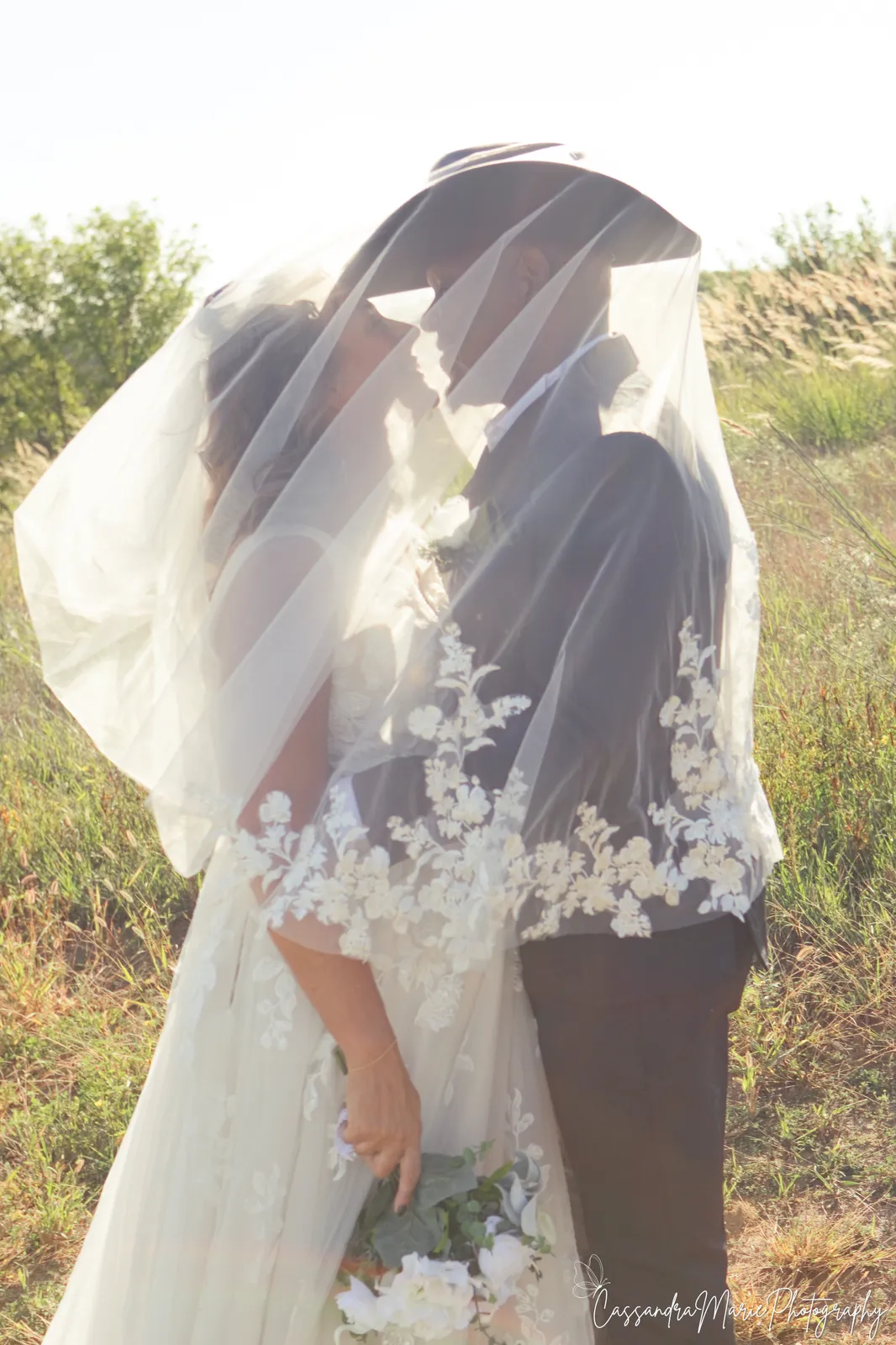
Here's a worry I hear from almost every couple: "We're so awkward in front of the camera."
And right behind it: "We don't want our whole wedding to feel like a photoshoot."
Both are completely valid. And here's the good news: you don't have to be a model, and your wedding doesn't have to feel like a photoshoot. As an Omaha wedding photographer, my job is to guide you through the posed moments and quietly capture everything else. For most of your day, you can completely forget I'm there.
But there's a sweet spot between ignoring the camera entirely and performing for it: camera awareness. A handful of small habits, like kissing a little longer, walking a little slower, and holding your flowers a little lower, can transform your photos without changing how your day feels at all.
This is the final post in the Before the Big Day series, and in a lot of ways, it's the one that ties everything together. Let's talk about how to be present and photographed beautifully.
Candids Need to Be Created
Let's start with a secret about candid photos: most of them don't just happen.
Back in Part 1, I said I can't photograph what isn't there, and that's especially true for candids. The photos that look effortlessly natural, like a couple laughing mid-walk or foreheads pressed together, usually happen because something prompted them. A reaction needs something to react to. A laugh needs a reason.
That's where I come in. During your portraits, I won't just say "stand here and smile." I'll give you prompts: whisper something to each other, walk toward me and bump shoulders, tell them what you're most excited about tonight. The moment you respond to each other, the stiffness melts away, and the real you shows up.
The same goes for your guests. If you want those sweet candid moments with the people you love, like your grandma squeezing your hand, your college roommate pulling you into a bear hug, or your little cousin beaming up at you, you have to create them. Go find your people. Hug them, hold hands, laugh together, and let them tell you how beautiful you look. If those interactions don't happen, they don't exist for me to photograph.
This is one more reason a first look can be such a gift (Part 2 covers it). When your portraits are done before the ceremony, you have time to actually mingle during cocktail hour and the reception, and every hug and hand-hold becomes a moment I can capture.
So if you've ever thought we just want candids, here's the truth: the best candids are gently guided, and the rest come from you showing up for your people. You don't have to know what to do. You just have to follow along, be with each other, and go love on your guests.
Slow Down: The Golden Rule of Wedding Photos
If I could give every couple just one piece of advice for their wedding day, it would be this: slow down.
Everything on your wedding day feels like it's moving at double speed. Nerves, adrenaline, and excitement make you walk faster, kiss quicker, and rush through moments you'll want to remember forever. Slowing down helps your photos, and it helps you actually soak it in.
- Walk slower. Down the aisle, back up the aisle, during portraits. A slow, steady walk gives me more chances to capture each step and keeps you looking graceful instead of hurried.
- Kiss a little longer. A quick peck lasts a fraction of a second. Hold it for a slow count of three, and I'll have time to capture it from the right angle, with the right expression.
- Look at each other a little more. Before the kiss, after the vows, during the first dance. Those lingering looks become some of the most emotional photos in your gallery.
- Hug a little longer. When you greet guests, family, or each other, let the hug breathe for a second before you pull away.
None of this looks or feels staged. It just gives beautiful moments the time to become beautiful photos.
The Ceremony: Small Habits, Big Difference
Your ceremony is one of the most important parts of your day, and a few simple habits make it photograph so much better.
Hold your flowers lower. Nerves make everyone clutch their bouquet up near their chest, which hides the details of your dress and makes shoulders look tense. Hold your bouquet at hip height, with your elbows relaxed. Share this with your bridesmaids too!
Space out the processional. Ask your wedding party to leave room between each person walking down the aisle. A good rule is to start walking once the person ahead is about halfway down. That way, everyone gets their own photo instead of a crowded line.
Pause at the end of the aisle. Before meeting your partner at the altar, take a breath. Look up at them. Let the moment land.
Plan your hands for the first kiss. This one surprises people. Decide ahead of time who's doing what: one of you can place your hands on your partner's face, and the other should take their waist or shoulders. Please don't both put your hands on each other's faces. When both of you do it, your arms stack up in front of you, and all I can see in the photo is elbows. The same goes for wrapping your arms around each other's necks. One person on the face, one on the waist or shoulders, and your faces stay beautifully visible.
Kiss a little longer. (Yes, again. It matters that much.) Your officiant will say the words, and there'll be cheering. Hold it for three seconds, and I promise you won't regret it.
Grab your bouquet before you walk back up the aisle. It's so easy to forget in the excitement! Your maid of honor will usually be holding it during the ceremony, so make sure it's back in your hands before you turn to face your guests. Otherwise, it's missing from your recessional photos, and from some of the most joyful images of the day.
Walk back up the aisle slowly and celebrate. Throw your hands up, laugh, look at your guests, kiss halfway up the aisle. This is one of the most joyful moments of your whole day, so let it last.
First Dance and the Dance Floor
Look at each other. During your first dance, it's natural to rest your chin on your partner's shoulder and sway. It feels sweet, but in photos, it means we only see the back of someone's head. Pull back every so often, look at each other, laugh, and whisper something.
Practice your dips (and your hands). If you're planning a dip, a spin, or choreographed moves, practice them before the wedding. Pay attention to where your hands and arms land. A hand across a cheek or an arm raised in the wrong spot can block a face at exactly the moment you want captured. Keep faces clear, and let me know ahead of time what you've planned, so I can be in the right spot.
Be aware of which direction you're facing. A dip facing away from the camera means I'm photographing your back. When you practice, think about where your guests (and I) will be.
Remember the rest of the room. During parent dances and open dancing, I'll be capturing reactions from your guests too. You don't need to do anything special here. Just have fun.
And as we covered in Part 3: colored dance lights are great, but if your DJ is using lasers, my camera goes away until they're off.
Toasts, Cake, and Reception Moments
Watch the speaker during toasts. Your reactions to the people you love are some of the most genuine photos of the night. Turn toward whoever's speaking, and let yourself laugh, tear up, or roll your eyes at the embarrassing stories.
Cake cutting: slow and together. Cut the cake with both hands on the knife, then pause and look at each other. If you're planning a playful cake smash, go for it. Just let me know so I'm ready!
First dances. This is a moment it really helps to have a second shooter with your package! If your dance includes elements like spins, dips, or lifts, having two photographers helps make sure we get faces instead of butts and backs.
Dancing. Don't be afraid to interact with the camera while I'm taking the dance floor photos! If you do, your wedding party will, and when your wedding party does, the guests will follow suit. Cheers the camera with your drink, make a funny face, or do a crazy pose.
Your exit: slow down (again). Whether it's sparklers, bubbles, or confetti, walk slowly through your send-off, look up at your guests, and stop in the middle for a kiss. Running through it means your photos will be a blur.
Portraits With Your Omaha Wedding Photographer: You Don't Have to Know What to Do
This is the part that makes most couples nervous, and it's the part I want you to worry about least.
During portraits, I'll guide you through everything: where to stand, how to hold each other, where to put your hands, where to look. You never have to wonder what to do or come up with poses on your own. That's my job.
That said, a few simple posing habits make a big difference, and they'll help you relax into it:
- Chin up. Nerves tend to pull your chin down, which can create shadows and make you look less confident than you feel. Lift your chin slightly, and you'll look instantly more open and radiant.
- Know your side (if you have one). Many people have a side of their face they prefer in photos. If you do, tell me ahead of time, and I'll keep it in mind while posing you. If you don't have a preference, that's great too.
- Elbows out. Pressing your arms flat against your body makes them look wider than they are. Keep a little space between your arms and your waist, especially when holding your bouquet or your partner.
- Keep connection. Always be touching each other in some way: hands on arms, waists, backs, faces. Connection is what makes a posed photo feel like a real moment.
- Breathe and drop your shoulders. Nerves pull shoulders up toward your ears. A deep breath drops them right back down.
- Talk to each other, not to me. The more you're focused on each other, the more natural you'll look.
- Laugh at yourselves. If something feels silly, it probably is, and your laughter will be the best part of the photo.
Why Camera Awareness Matters With True-to-Color Photography
With true-to-color photography, your photos show your day honestly: your real colors, your real expressions, your real moments. I use light retouching for small things like a blemish or a flyaway hair, but I don't reshape moments after the fact.
That's why these small habits matter. A face blocked by elbows during a first kiss, a bouquet held tight against your chest, or a dip facing away from the camera can't be fixed in editing. But a longer kiss, a slower walk, and a lingering look give true-to-color photography everything it needs to tell your story exactly as it happened.
Camera Aware Doesn't Mean Photoshoot
Here's the most important thing I want you to take away from this post: camera awareness is a small part of your day, not the whole thing.
For the vast majority of your wedding, you won't be thinking about the camera at all. You'll be hugging your guests, dancing with your friends, crying through toasts, and eating way too many appetizers. I'll be there quietly capturing it all.
These habits are just little gifts to your future self. They take almost no effort, and they make a huge difference when you look back at your gallery years from now.
And remember Part 6: be a type B bride on the day of. Don't stress about getting every kiss or dip perfect. If you forget, I'll gently remind you. Just be present, and let me handle the rest.
Your Quick Camera Awareness Checklist
Screenshot this and share it with your partner:
- Walk slower, everywhere.
- Kiss a little longer, for a slow count of three.
- Look at each other a little more.
- Go find your guests: hugs, hand-holds, and laughs create the candids.
- Hold your flowers at hip height.
- Space out the processional.
- First kiss: one person's hands on the face, the other's on the waist or shoulders. Never both on the face!
- Grab your bouquet before walking back up the aisle.
- Pull back and look at each other during your first dance.
- Practice your dips, and keep your hands from blocking faces.
- Chin up, elbows out, and keep connection during portraits.
- Let me know if you have a side you prefer.
- Watch the speaker during toasts.
- Walk slowly through your exit, and kiss in the middle.
- Don't forget to interact with the camera during the dance party!
That's a Wrap on Before the Big Day
Thank you for walking through this series with me. If you've read all seven parts, you're more prepared for your wedding day than most couples ever are. Here's a quick look back:
- Part 1: Your Wedding Photos Start Long Before I Pick Up My Camera
- Part 2: First Look or Not? How Your Choice Shapes Your Wedding Day Timeline
- Part 3: How Your Wedding Day Timeline Actually Works
- Part 4: Golden Hour Waits for No One
- Part 5: DIY Wedding Makeup That Photographs Beautifully
- Part 6: What Happens When Something Goes Wrong on Your Wedding Day
- Part 7: Camera Aware, Not Camera Obsessed
Through all of it, the message is the same: plan with intention, make room for what matters, and then let go and enjoy your day. You bring the love, the people, and the moments. I'll bring the guidance, the light, and the camera.
And if you're still searching for an Omaha wedding photographer who will guide you through every step, from the first planning decisions to the last dance, and capture your day with true-to-color photography that looks exactly like you remember it, I'd love to hear your story.
— Cass