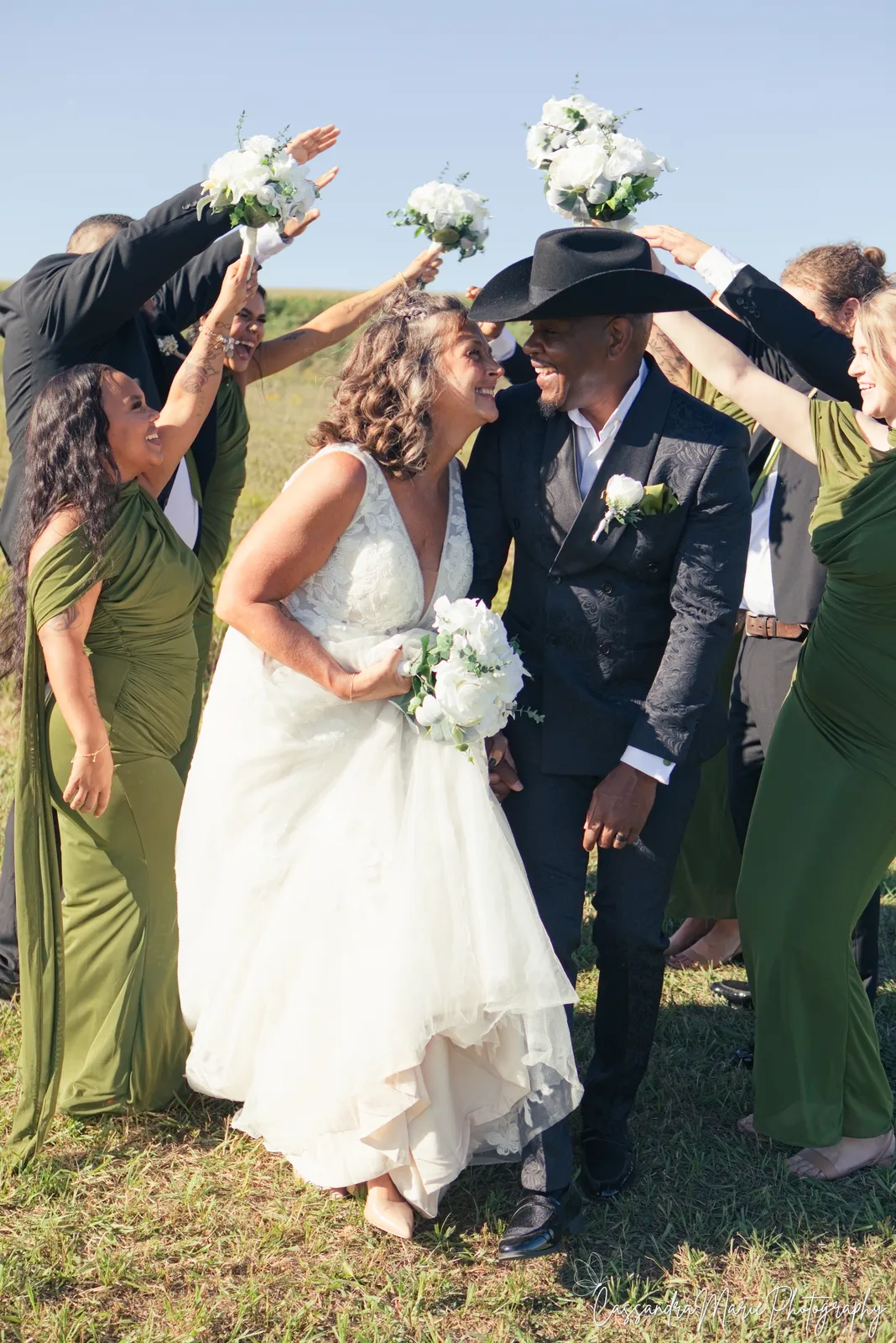
When couples first see a wedding day timeline, the reaction is usually one of two things: "Oh, that makes so much sense," or "Wait… why does everything take so long?"
Both are completely fair.
As an Omaha wedding photographer, I've learned that the timeline is the quiet backbone of your entire wedding day. It decides whether you feel rushed or relaxed, whether you get to hug your guests, and whether your gallery is full of variety or just the essentials. In Part 1, I said your timeline is a creative decision, not just a logistical one. In Part 2, we talked about how the first look decision shapes it. Now let's walk through the whole day, start to finish, so you know exactly what happens, why it takes the time it does, and where a little extra breathing room makes all the difference.
Your Omaha Wedding Photographer Builds the Timeline With You
Before we dive in, I want you to know something: you don't need to become a timeline expert.
Your photo timeline is something I take care of. If you don't have a day-of coordinator, I'll write your timeline myself. If you do have one, I'll work directly with them so your photo plan fits seamlessly into the rest of the day. Either way, we'll shape it around your ceremony time, your venue, your priorities, and golden hour.
This post is here so you understand the why behind it. When you know why family photos need thirty minutes or why hair and makeup need a buffer, the timeline stops feeling like a list of rules and starts feeling like a plan that protects your day.
Start With Your Anchors
Every timeline is built around a few fixed points. Once these are set, everything else falls into place around them:
- Your ceremony time. This is the biggest anchor. Everything before it counts backward, and everything after it counts forward.
- Sunset. Golden hour is my signature, and planning around it is my job. But sunset in Omaha shifts from around 9:00 PM in late June to before 5:00 PM in December, so your wedding date shapes the whole flow.
- Your first look decision. As we covered in Part 2, this determines whether your portraits happen before or after the ceremony.
- Your venue(s). Are you getting ready, getting married, and celebrating in one place, or traveling between locations? Travel time is real time.
- Venue rules. Some venues have strict start and end times, noise curfews, or limits on things like sparklers. Know these early.
Getting Ready: Where the Day (and the Story) Begins
Getting-ready coverage is where your story starts. It's the nervous laughter, the quiet moments, the buttons and the zippers and your mom tearing up before you're even dressed.
I usually arrive while hair and makeup are finishing up. There's no need for photos of you with half your hair in rollers (unless you want them!). I'll start with your details while you finish, then capture the final touches and the moments that follow.
If your package includes a second shooter, they'll be with your partner and the groomsmen while I'm with you. That way both sides of the morning get told: the nerves, the laughs, the last-minute tie adjustments, all of it.
Details come first. Remember the detail box from Part 1? Have it ready when I arrive: invitation suite, rings, shoes, jewelry, heirlooms, vow books, and extra florals. The sooner I have everything in one place, the more time I have to create detail photos that feel intentional, not rushed.
Hair and makeup almost always run long. This is the number one place timelines slip. It's nobody's fault; it's just the nature of getting several people ready in one morning. Build in at least 15 to 30 minutes of buffer here, and ask your stylist to schedule you to finish early rather than last.
Getting dressed takes longer than you think. Between the dress, the buttons, the jewelry, the veil, and the photos of all of it, plan on about 30 minutes. It's one of the most treasured parts of the morning, so let it breathe.
A tidy space makes a difference. As we talked about in Part 1, your getting-ready space shows up in your photos. Designate a corner for bags and clutter, and you'll love these images so much more.
Portraits Before the Ceremony (If You're Doing a First Look)
If you've chosen a first look, this is where your portraits happen, in this order:
- First look
- Wedding party photos
- Couple portraits
- Immediate family photos
And here's the important part: pre-ceremony photos wrap up a full hour before your ceremony. That hour gives you time to rest, touch up, grab a snack and some water, and get out of sight before early guests start arriving. Trust me, you do not want to be sprinting from portraits straight to the aisle.
If you're not doing a first look, this block simply moves to after the ceremony, and every minute there becomes a little more precious. (Part 2 covers exactly how that plays out.)
Travel Time: The Sneaky Timeline Thief
If you're getting ready in one place and getting married in another, travel time needs its own line on the timeline. And it's almost always longer than Google Maps says.
Loading everyone into cars, finding the one bridesmaid who left her phone upstairs, parking, and unloading all add up. Here in Omaha, construction season and game days can add surprise delays too. A good rule: take the estimated drive time and add at least 15 minutes.
The Ceremony
Most ceremonies last somewhere between 20 and 45 minutes, depending on your traditions, readings, and officiant.
I'll connect with your officiant ahead of time. Before your wedding, I reach out to your officiant directly to go over ceremony prep: where I'll be standing, any rules about photography during the service, when to step aside for your first kiss, and anything unique about your ceremony. All I need from you is their contact information. Send it my way once your officiant is confirmed, and I'll take it from there.
A few other things help here:
- Ceremonies rarely start exactly on time. Five to ten minutes late is very normal while the last guests find their seats. Your timeline should expect it.
- Consider an unplugged ceremony. (More on why in Part 1.) Your guests get to be present, and your photos stay full of faces instead of phones.
- Take your time walking back up the aisle. Pause, celebrate, soak it in. It's one of the most joyful moments of the day.
Family Photos: Short, Sweet, and Organized
Family photos are one of the most important parts of your day, and one of the most likely to run long. They don't have to.
Make a list ahead of time. We'll put together your family photo list before the wedding: every grouping, in order, with names. This keeps us moving and makes sure no one is forgotten.
Plan on about two minutes per grouping. Ten groupings means roughly twenty minutes, and that's with everyone ready and waiting. Big groups take longer.
Assign a point person. Choose a family member or friend who knows everyone and isn't shy. Their job is to gather people and make sure Uncle Mike doesn't wander off to the bar.
Tell your family ahead of time. Let everyone on the list know when and where to be, and ask them to stay put after the ceremony. This single step saves more time than anything else.
Keep it to immediate family during this block. Extended groupings, friend groups, and college roommates are wonderful, and they're often easier to capture during the reception when everyone's relaxed and nearby.
Cocktail Hour
If you did a first look, this is your time. Go hug your people, grab a drink, and eat the appetizers you picked out. I'll be capturing candids of you and your guests.
If your portraits are happening now instead, cocktail hour is when we'll get through family, wedding party, and couple photos, so it'll be a busier stretch for you, and I'll be with you, not with your guests.
That's where a second shooter really shines. If your package includes one, they'll cover cocktail hour: your guests mingling, the laughter, the drinks, the little moments you'd otherwise never see. If you're not doing a first look, I highly recommend a second shooter for exactly this reason. Otherwise, that whole hour of your wedding goes unphotographed.
This is also when the reception space gets photographed before guests walk in. Your tablescapes, centerpieces, cake, and decor all look their best untouched, before chairs are pulled out and drinks are set down. With true-to-color photography, this is where your florals, linens, and color palette get captured exactly as you designed them.
The Reception
Receptions have a natural rhythm, and a little planning keeps the energy up and your photos full.
Group your big moments early. Grand entrance, first dance, welcome, and toasts flow beautifully when they're close together. Then parent dances and cake cutting can follow dinner. Getting the formal moments done early means you get to enjoy the rest of the night, and your guests get to dance sooner.
I eat when you eat. Photos of people mid-bite aren't flattering for anyone, so while you and your guests are eating, I'll take a quick break to eat too. Plan for your photographer's meal to be served around the same time as yours, so I'm ready the moment toasts begin.
Toasts create the reactions. As we talked about in Part 1, a reaction needs something to react to. Speeches from the people you love give us laughter, tears, and some of the most genuine photos of the whole night.
Dance floor lighting is fun. Colored dance lights are great; I'll use flash and drag the shutter to capture all that energy and color. The one exception is lasers: if your DJ uses laser lighting, my cameras go away while the lasers are on, since they can permanently damage camera sensors. Let's plan for that with your DJ ahead of time.
Golden Hour Portraits and True-to-Color Photography
Whether or not you did a first look, I'll plan a short golden hour portrait session into your reception timeline whenever the season allows. Usually it's just 15 to 20 minutes, slipped away while your guests are dancing or finishing dinner.
These are often couples' very favorite photos of the whole day. It's quiet, the light is at its warmest, and by then the nerves are gone and you're just happy. We'll go deeper on golden hour, and what happens when timelines shift, in Part 4.
Warm, natural evening light is where true-to-color photography shines brightest: skin tones glow, florals stay rich, and everything looks exactly as beautiful as it felt.
Your Grand Exit
If you want a sparkler, bubble, or confetti send-off, it has to be on the timeline, and it has to happen while I'm still there.
Consider a faux exit. Many couples do a "fake" send-off before my coverage ends, then head right back inside to keep dancing. You get the photos, your guests get the moment, and the party doesn't have to stop.
Or do your exit between the ceremony and reception. If you're getting married at a church and traveling to a separate reception venue, the church exit is a perfect moment for a send-off. Your guests line the steps with bubbles, petals, or confetti, you run through the celebration, and you head off to the reception. It's joyful, it photographs beautifully, and it's done before the evening even starts.
Check your venue's rules. Some venues and churches don't allow sparklers, confetti, or petals, or they have specific requirements, so it's worth asking early.
Where Buffer Time Matters Most
If you take one thing from this post, let it be this: buffer time is a gift to yourself.
A timeline with no breathing room means one small delay ripples through your entire day. A timeline with thoughtful buffers absorbs the little hiccups so no one even notices them. The places that need it most are:
- Hair and makeup: 15 to 30 minutes
- Getting dressed: a few extra minutes, always
- Travel between locations: at least 15 minutes beyond the estimate
- Before the ceremony: that full hour after photos wrap
- Family photos: a few extra minutes for wanderers and big groups
A Sample Full-Day Timeline
Here's what a full day might look like for a summer wedding with a first look, a 4:00 PM ceremony, and sunset around 8:45 PM. Yours will look different, and we'll build it together, but this shows how the pieces fit:
- I arrive and photograph your details
- Final hair and makeup touches, getting-ready candids (second shooter with the groomsmen, if included)
- Getting dressed
- First look
- Wedding party photos
- Couple portraits
- Immediate family photos
- Photos wrap. You relax and touch up while I photograph the ceremony and reception spaces
- Ceremony
- Cocktail hour (you're there!)
- Grand entrance and first dance
- Dinner
- Toasts
- Parent dances and cake cutting
- Dancing
- Golden hour portraits
- Back to the party
- Faux sparkler exit
Notice how the formal moments are clustered, the buffers are built in, and golden hour sits right where the light is warmest? That's the goal: a day that flows so naturally, you never feel the timeline at all.
Questions to Ask Yourself as You Plan
- Where am I getting ready, and how far is it from my ceremony and reception?
- What does my hair and makeup schedule look like, and am I finishing early enough?
- Who's on my family photo list, and who's my point person?
- Have I sent my photographer my officiant's contact information?
- Which reception moments matter most to me?
- Do I want a grand exit, and where does it make the most sense: after the ceremony, or at the end of the night?
- Where have I built in breathing room, and where is the day packed too tight?
Coming Up Next in Before the Big Day
In Part 4, we're talking about golden hour: why it's worth planning around, how it changes with the seasons here in Nebraska, and what happens when timelines shift and the light doesn't wait.
And if you're still searching for an Omaha wedding photographer who will build your timeline with you, guide you through every part of the day, and capture it all in true-to-color photography, I'd love to hear your story.
— Cass