Before the Big Day · Part 1
Your Wedding Photos Start Long Before I Pick Up My Camera
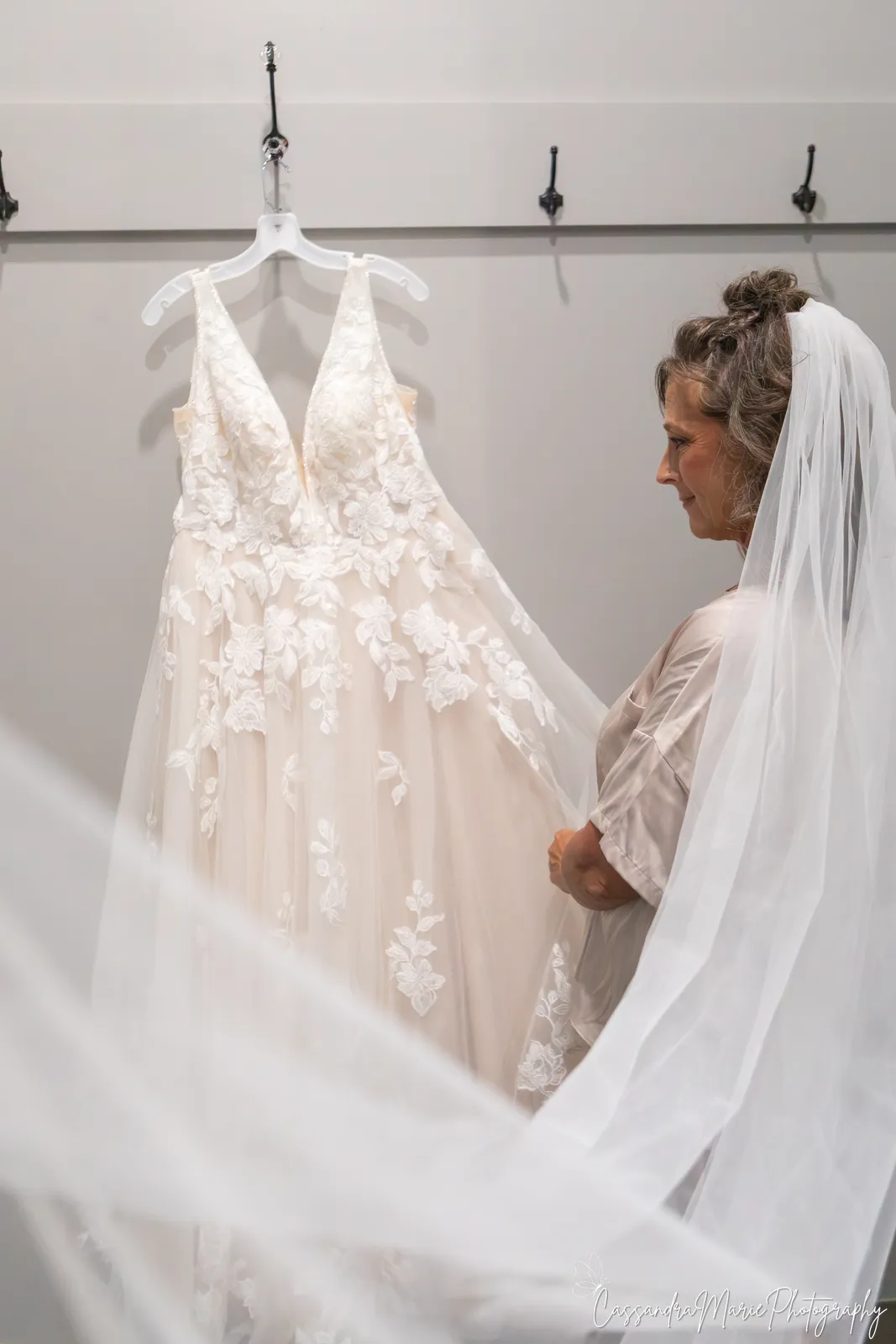
As an Omaha wedding photographer, here's something I think you deserve to hear early, even though most photographers won't say it out loud:
I can't photograph what isn't there.
That sounds obvious. But it's one of the most important things to understand while you're planning your wedding, because it quietly shapes every photo you'll get back.
A camera is honest, and my approach, true-to-color photography, is honest too. I don't invent moments, add flowers that weren't ordered, or turn a rushed ten minutes into a relaxed hour. I capture what's actually happening in front of me. My job is to see it, frame it, direct it, and find the best light for it, beautifully and truthfully. But the raw material? That's the day you create.
This isn't meant to add pressure. It's the opposite. Once you understand how this works, you get to plan with intention and put your time, money, and energy toward what matters most to you. That makes this first post in the Before the Big Day series the foundation for everything that follows.
What I Bring as Your Omaha Wedding Photographer, and What You Bring
Think of your wedding photos as a collaboration.
What I bring:
- Finding and working with the light (never your job, promise)
- Composition, angles, and timing
- Posing and gentle direction, so you never have to wonder what to do with your hands
- Anticipating moments before they happen
- True-to-color editing that looks like your actual day, not a trendy filter
What you bring:
- The setting: your venue, your getting-ready space, your decor
- The details: florals, attire, heirlooms, stationery, the little things with meaning
- The people and the moments: who's there, what happens, what you make room for
- The time: how much of your day is available for photos, and when
I can take a so-so hallway and make it look incredible. What I can't do is photograph a sparkler exit that wasn't planned, a grandparent portrait there wasn't time for, or a reaction to a letter that was never written.
What True-to-Color Photography Means for Your Wedding
True-to-color photography means your photos look the way your day actually looked. Your florals stay the exact shade you picked. Your dress stays the white (or ivory, or champagne) it really is. Skin tones look like you, not orange, gray, or washed out.
That's a big part of why I care so much about what you create. With true-to-color photography, the colors, textures, and mood of your day come through honestly, so the choices you make while planning are the choices you'll see in your gallery forever. Twenty years from now, you'll look back and think, yes, that's exactly how it was.
Pinterest Is for Feelings, Not Blueprints
Let's talk about your Pinterest board, because I know you have one. (Good! I love them.)
Here's the thing about those gorgeous saved photos: every one of them exists because of a very specific set of circumstances. A certain venue. A certain season. A certain time of day, a certain couple, a certain amount of time set aside for that exact shot. When you save a photo of a couple in a wildflower field in soft evening light, you're saving the result of all of those things lining up.
So if your ceremony is in a downtown Omaha ballroom in December, that wildflower photo isn't going to happen. And that's okay! Your day will have its own beauty, and it deserves to be photographed for what it is, not measured against something it was never going to be.
Here's how I'd use Pinterest instead:
- Save for the feeling, not the exact shot. Do you love how relaxed a couple looks? How moody or bright an image feels? How much of the scene is shown? That tells me far more than the pose itself.
- Notice the patterns. If half your board is candid laughter and very few are posed, that's useful information about what you actually care about.
- Tell me why you saved something. "I love how she's holding the bouquet" or "this reminds me of my parents" gives me something real to work with.
- Keep it focused. Twenty meaningful pins beat three hundred random ones.
The best wedding photos aren't copies. They're yours.
Your Setting Shapes Your Story
Every space has a personality, and that personality shows up in your photos.
Your venue. When you're choosing where to get married, picture what you'd want your photos to feel like. A rustic barn, a botanical garden, a modern downtown Omaha loft, and a family backyard all tell very different stories. None of them is better than the others. Just pick the one that feels most like you, knowing your photos will carry that feel.
Your venue's lighting sets the mood. Every venue has its own lighting, and it affects both the mood of your photos and the type of photos you'll get. A bright, window-filled space photographs very differently than a dim, candlelit chapel or a basement-level reception hall.
This matters most if you already know you don't love the look of flash photos. A little fill flash is something I use often, and most of the time you'd never know it was there. It just gently brightens things up. But if your getting-ready space and your ceremony are both truly dark, there are really only two ways those photos can go:
- Dark and moody: rich shadows, lots of atmosphere, and a lower-light feel overall
- Direct flash: bright, crisp, and clearly flash-lit, which some couples love and some really don't
Neither is wrong! But if you picture your gallery feeling bright, airy, and natural, a venue that stays dark all day is going to work against that vision. As you tour venues, just ask yourself: does this space feel the way I want my photos to feel? You don't have to become a lighting expert (that's my job). You just want a space that matches the mood you're dreaming of.
Your getting-ready space. This one surprises people. Getting-ready photos are some of the most intimate images of your whole day: buttoning the dress, a quiet moment with your mom, the nervous laughter. But if the room is crowded with suitcases, takeout bags, garment bags, and eight people's belongings, that's what's in the background. A few simple things help:
- Choose a space with some room to move around
- Designate one corner or side room for bags, coats, and clutter
- Hang your dress and attire somewhere easy to reach
- Keep a clear surface for your details (more on that below)
You don't need a magazine-worthy suite. You just need a space that isn't working against you.
Your reception lighting. Here's where things get fun. Colored dance floor lights? Let's go for it. I'll use flash to keep you looking like you, then drag the shutter to pull in all that color and movement. That's how you get those energetic, light-streaked party photos that feel like the best night ever.
The one exception is lasers. If your DJ is using laser lighting, my cameras go away while the lasers are on. Lasers can permanently damage camera sensors, and one hit can ruin very expensive equipment in an instant. If lasers are part of the plan, let me know ahead of time. We can talk with your DJ about saving them for a specific part of the night, so I can capture the dance floor before or after.
The Details Only Exist If You Bring Them
Detail photos are a sweet part of your gallery. They're the little pieces you'll want to remember years from now. But I can only photograph the details that are actually there when I arrive.
A few weeks before the wedding, gather everything into one box or bag and hand it off the morning of:
- Your invitation suite (an extra full set, not the one on your fridge!)
- All the rings: engagement ring and both wedding bands
- Shoes, jewelry, perfume, veil, hair pieces
- Heirlooms: a grandmother's brooch, a parent's handkerchief, a meaningful photo
- Vow books, love notes, anything handwritten
- Any extra florals, like boutonnieres and a few loose stems
The same goes for your florals and decor overall. If lush, overflowing flowers are a huge part of your dream, that's worth prioritizing in your budget, because it will show, and with true-to-color photography, those blooms will look exactly as vibrant as they did in person. If flowers aren't your thing, put that money toward what is. Your photos will reflect your priorities either way. Let them reflect the right ones.
Moments Need Room to Happen
This is the big one.
Some of the most powerful photos in any gallery are emotional ones: a dad's face as he sees his daughter for the first time, a best friend laughing through a toast, a couple completely wrapped up in each other. Those moments feel spontaneous, and they are. But they almost always happen because someone made space for them.
A reaction needs something to react to. A tear needs a reason. So as you plan, ask yourself: what moments do I want to exist?
- Letters or gifts. Exchanging letters with your partner, or reading a letter from a parent, creates some of the most genuine emotion of the whole day.
- A private moment with someone special. A few quiet minutes with a grandparent, a sibling, or your parents, just you and them, can become a treasured photo.
- A first look (more on this in Part 2!), either with your partner or a parent.
- Toasts and speeches. Ask the people you love to speak. Their words create the reactions.
- Traditions and exits. Cultural traditions, a sparkler or bubble send-off, a last dance, a private dance. If you want it photographed, it has to be on the plan.
And the people matter too. If you want a photo with your college roommates, your grandparents, or your whole extended family, those people need to be there, know where to be, and have time set aside for it. A shared family photo list ahead of time makes this so much smoother.
Time Is Part of the Picture
You can't photograph a moment there's no time for.
If you have twenty minutes for couples portraits, you'll get twenty minutes' worth of variety. If you have forty-five, you'll get more locations, more poses, more breathing room, and more of those in-between moments where you're just being together. More time doesn't automatically mean better photos, but not enough time will always limit them.
The same goes for pace. A day that's packed wall-to-wall is a day where everyone feels rushed, and rushed people look rushed in photos. Buffer time is one of the kindest things you can give yourself (and your gallery).
We'll dig into exactly how to build a photo-friendly timeline in Part 3. For now, just know this: your timeline is a creative decision, not just a logistical one.
Your Guests Are in the Photos Too
A quick but important one: consider an unplugged ceremony.
When guests lean into the aisle with their phones and iPads, they end up in your photos, sometimes directly between me and your processional. A kind note from your officiant before the ceremony ("the couple invites you to be fully present with them") makes a huge difference. Your guests get to actually watch you, and you get photos full of faces instead of screens.
The Part You Can't Fake: Being Present
Here's the truth at the heart of all this.
I can guide you into beautiful poses. I can tell you where to stand, how to hold each other, where to look. But I can't manufacture how you feel. The photos that make you tear up twenty years from now are the ones where you were fully there: laughing, holding on, soaking it in.
So the best thing you can do for your photos is also the best thing you can do for your day. Plan a wedding that feels like you, make room for the moments that matter, give yourself enough time to enjoy it, and then let go and be in it. Leave the rest to me.
A Few Questions to Ask Yourself as You Plan
Take these with you as you make decisions over the coming months:
- When I picture my wedding photos, what do I want them to feel like?
- Which moments would I be heartbroken not to have photographed?
- Who are the people I most want photos with, and is there time for that?
- Does my venue and getting-ready space fit the story I want to tell?
- Where am I spending money or energy on things that don't actually matter to me?
- Have I made room to be present, or is every minute scheduled?
You don't need all the answers right now. You just need to start asking.
Coming Up Next in Before the Big Day
In Part 2, we'll tackle one of the biggest decisions that shapes your whole photo timeline: should you do a first look? I'll walk through the honest pros and cons of both options, and how each one changes when (and how much) we can photograph.
Until then, happy planning. And if you're still searching for an Omaha wedding photographer who will guide you through every step and capture your day in true-to-color photography, I'd love to hear your story.
— Cass